
Ski-Season Weekends in the 2027 Toyota bZ Woodland: AWD, Range and Room for Gear
Ski season brings early wake-ups, snowy roads and a cargo area full of boots, poles and helmets. The right vehicle makes those weekends easier,...
Read more
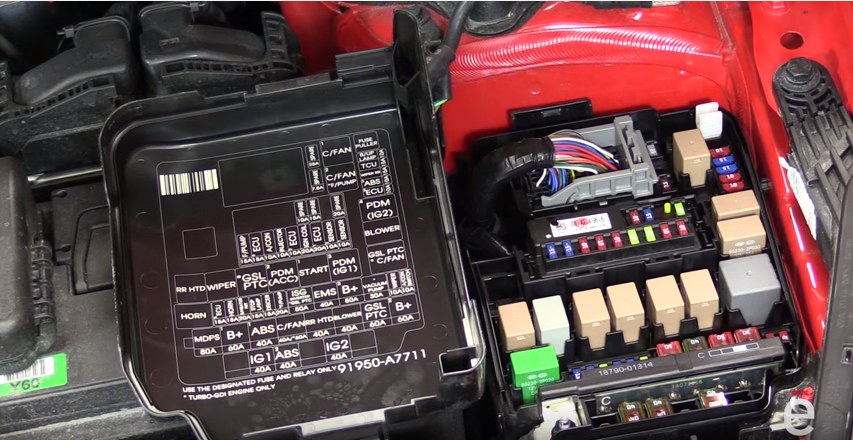
Well documented and presented by an expert mechanic, the Protect Yourself video is precise about the steps for replacing a fuse. Although the task may seem unpleasant, this short article provides good advice.
In summary, the steps are:
1. Locating the blown fuse
In case of an electrical failure, you should first look at the fuse compartment. Nine times out of ten you’ll find the cause of the failure. Check the owner’s manual:You’ll find both the location of the fuse box and the exact location of the fuse that would provide protection in the event of an electrical failure. Sometimes you have to count the fuses or refer to a diagram (not always very clear) on the back of the hatch. All of the nominal amperage values of all of the fuses are listed there.
2. Repairing a faulty contact
It’s possible that (especially in cars that are more than 15 years old) with oxidation due to moisture, fuses in the engine compartment cause an interruption to the current. The function fails and causes an outage. Just roll the fuses around in their compartment to dislodge the sulfate and reconnect. Try it, it works!
3. Removing a blown fuse
The jumper fuse, and even more so the mini-fuses, are difficult to access, even if you have long fingernails. Especially because they can "weld" into their location, making the process more complicated. Small pliers, normally housed by the manufacturer behind the access door near the spare fuses, should help you extract it properly. Just use them to grab the head of the fuse and pull on it.
4. Choosing the right fuse
The ideal is to replace a worn fuse by one with the same amperage. When this isn’t possible, you can make do with a fuse whose value is maximum 5 amps greater than the one being replaced. Beyond this, there is risk of fire. Note that this applies only to current containing between 10 and 25 amps.
Warning! An electronic automatic transmission protected by a 1.5A fuse must always be replaced by one with the same value.
5. Consider spare fuses
A small reserve of 3 or 4 spare fuses is usually attached to the back of the access hatch to the fuse holder. If you must use one of them, think about putting a new one in its place so that you’re not missing one when it’s needed.
An important point: It’s possible that a fuse will blow for no reason or from a surge; that is a fuse's primary function. However, if it burns out several times, see your dealer right away: There’s probably an underlying problem.
Ski-Season Weekends in the 2027 Toyota bZ Woodland: AWD, Range and Room for Gear
Ski season brings early wake-ups, snowy roads and a cargo area full of boots, poles and helmets. The right vehicle makes those weekends easier,...
Read more
2028 Highlander Electric: Everything We Know So Far
The all-new 2028 Toyota Highlander arrives with a major transformation: it becomes fully electric in Canada. With three rows of seating, an...
Read more
Tundra vs. Tacoma
Can’t decide between the Toyota Tacoma and the Toyota Tundra? Discover the key differences between these two iconic trucks to find the one that...
Read morePowered and developed by
